How To Get There?
Don’t focus on the colour of the walls in your house if you don’t have good foundations or you’ll be forever sorting out cracks rather than enjoying the delicate mocha.
All these messages are built from the science and understanding of what actually works to get people a long-term recovery in our clinic.
Whilst figuring out Who’s In Control? helps us understand where you currently are, and What Do You Want More Of? helps us understand the importance of keeping our focus on where we are going rather than what we are moving away from, with any journey we want to know the mode of transport from the start point to the destination and why. How To Get There? will help you understand what the process is and how to do it.
A massively common pitfall with helping people is that we get trapped in a cycle of helping people develop better coping strategies with the focus on pain management. This often leads to a reduction in active activities such as lifting things and an increase in passive activities such as stretching and avoiding things we think the body won’t like in the short-term.
This can slowly lead to an inwardly spiralling life where we mistake getting better with learning how to avoid things that the body doesn’t like (Who’s In Control?!), we know how this isn’t helpful but how do we avoid it happening? What we need to do is make sure that we make progress towards what we want more of and whilst most journeys have up and downs, if the destination is worth it, we carry on until we get there and often start to enjoy the journey along the way.
Example: you take your car to the garage because it will only drive 30mph, in honesty a warning light came on a few weeks ago but you were busy so it’s only now that you can’t get anywhere that it’s urgent. The garage quickly says “the car is out of limp mode and we’d recommend…” you interrupt, “amazing my day is saved, I don’t care what you did” as you drive away “those mechanics are wizards”. The next morning on the way to work it happens again, limp mode and the light, it might begin with w but it isn’t wizards you think this time. You limp back angry that the problem returned and they say “well you asked us to get you back on the road today, which we did, when we tried to book it in for the problem to be addressed we were surprised you dismissed our attempts but we didn’t want to be pushy”
Not many garages would be naive enough to make this mistake as of course, you wanted the problem fixed, the light was a warning with limp mode being a stronger warning for you to take action that you couldn’t ignore.
Pain is our alert system and the more we ignore it the bigger the messages it will give us until we can’t ignore them. Long-term what often happens is we inwardly spiral so we actually never try to drive much faster than 30mph often convincing ourselves that it’s all we are capable of and it’s fast enough isn’t it, as limp mode is so disruptive, this is where we fearfully stay.
Limp mode in a car isn’t necessarily activated because the problem became worse it’s often more related to the time the warning light is on so the car’s computer decides to give you a stronger message to take action. The same happens in the body, the brain being the computer that gives you stronger and stronger messages by amplifying the pain in an attempt to get you to address it. You often, like with the car, don’t know how but don’t mistake switching the alarm system off with a complete recovery.
Pain needs to be a proportional response to the actual problem. What happens is the brain slowly increases the discrepancy between what pain is telling you is happening compared to what’s actually happening in your body the longer you have a problem.
The importance of this is due to the fact that what we want is a life where you are in control of what you do rather than your body and you have the freedom to choose activities you want to do for reasons of enjoyment and fulfillment rather than the fear of what might happen if you don’t do them.
Example: a boat is sinking, the crew are bailing out water and when enough resources are focused on this the boat stops sinking, providing they all keep working it will stay afloat. What the chief engineer might do now is divert resources to fixing the reason it’s sinking so everyone can stop bailing the water out and focus on boat maintenance and other projects. Bigger buckets might be useful as a temporary measure but only so enough attention can be given to the real reason it’s sinking.
The Key Takeaway:
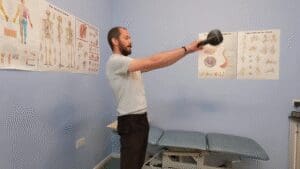
The key thing to take away here is that passive activities are bailing out the water. It is the strengthening and flexibility exercises that will prevent the sinking and stop the crew from bailing out the boat.
This is why engaging with the exercises is so important as it’s the main vehicle for a long-term recovery with the concepts introduced over these emails making sure the machinery is able to be used to its full capacity and doesn’t go into limp mode unless there is a real need for it to.
We look forward to helping you fix your boat and plan your exciting adventures.